




What Is Damp Proofing and Why It Matters
Property ownership in the UK, particularly within London and its surrounding boroughs, comes with a unique set of maintenance challenges. We are dealing with historic housing stock—Victorian terraces in Fulham, Edwardian semis in Ealing, and Georgian conversions in Central London—that was built long before modern cavity walls became the standard. The primary threat to the structural integrity of these buildings is moisture. When discussing property care, the question of what is damp proofing is not merely academic; it is a critical component of asset management.
Ignoring moisture ingress is not an option. It compromises the thermal efficiency of the building envelope, degrades internal finishes, and facilitates the growth of fungal decay like dry rot. To protect your investment, you must understand the mechanisms at play.
Defining the Solution: What Is Damp Proofing?
In the strictest technical sense, what is damp proofing? It is the application of materials and techniques designed to prevent moisture from passing into the interior spaces of a building. However, this definition simplifies a complex procedure. When a surveyor assesses a property, asking what is damp proofing in that specific context means identifying the source of water ingress—be it rising damp from the ground, penetrating damp from external defects, or condensation due to poor ventilation—and applying the correct remediation.
For many London properties constructed with porous London Stock brick, the original slate or bitumen Damp Proof Course (DPC) has likely failed or was never installed. Therefore, what is damp proofing effectively becomes the retrofitting of a new barrier to control capillary action. It is about creating a horizontal zone in the masonry that water cannot cross, ensuring the habitable space remains dry regardless of the ground conditions.
The Technical Process: How Does Damp Proofing Work?
Understanding the methodology is crucial for any homeowner commissioning work. How does damp proofing work involves changing the physical properties of the masonry. In the vast majority of remedial cases, we utilize chemical injection systems. We drill into the mortar course at a specific height above the external ground level and inject a silane/siloxane cream.
So, how does damp proofing work at a microscopic level? The cream migrates into the capillaries of the mortar and brickwork before curing. It lines the pores with a hydrophobic (water-repellent) barrier. This reverses the surface tension. Instead of the masonry acting like a wick and drawing groundwater upwards, the capillaries repel the moisture.
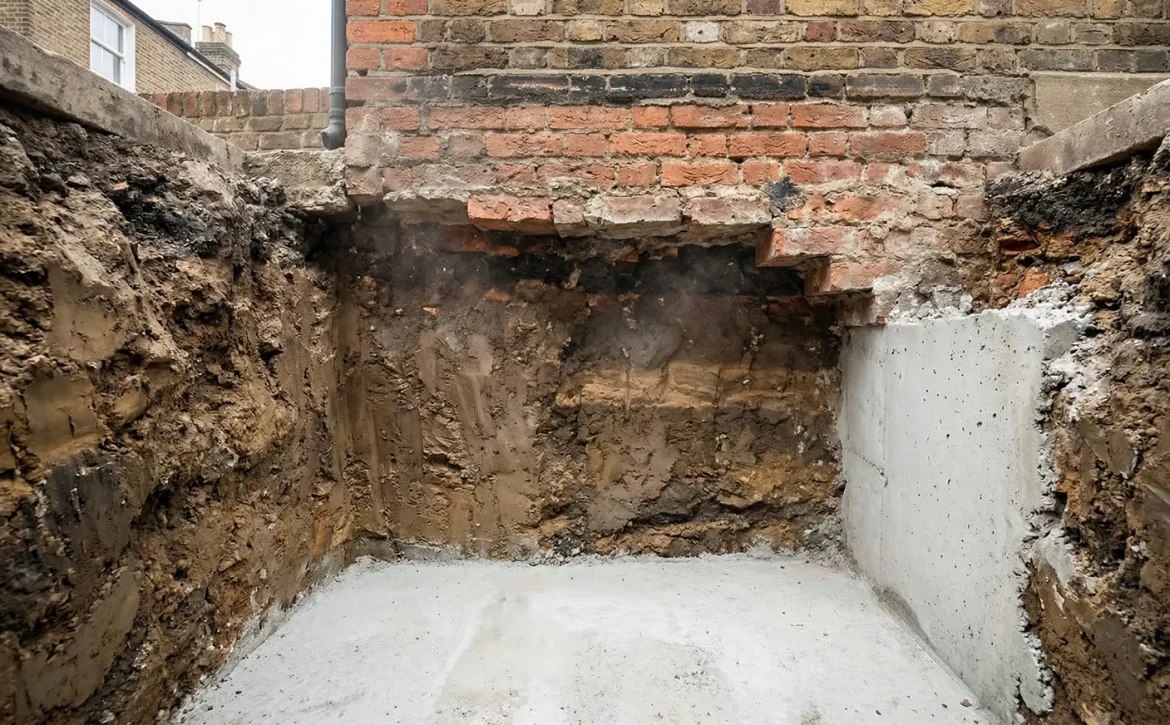
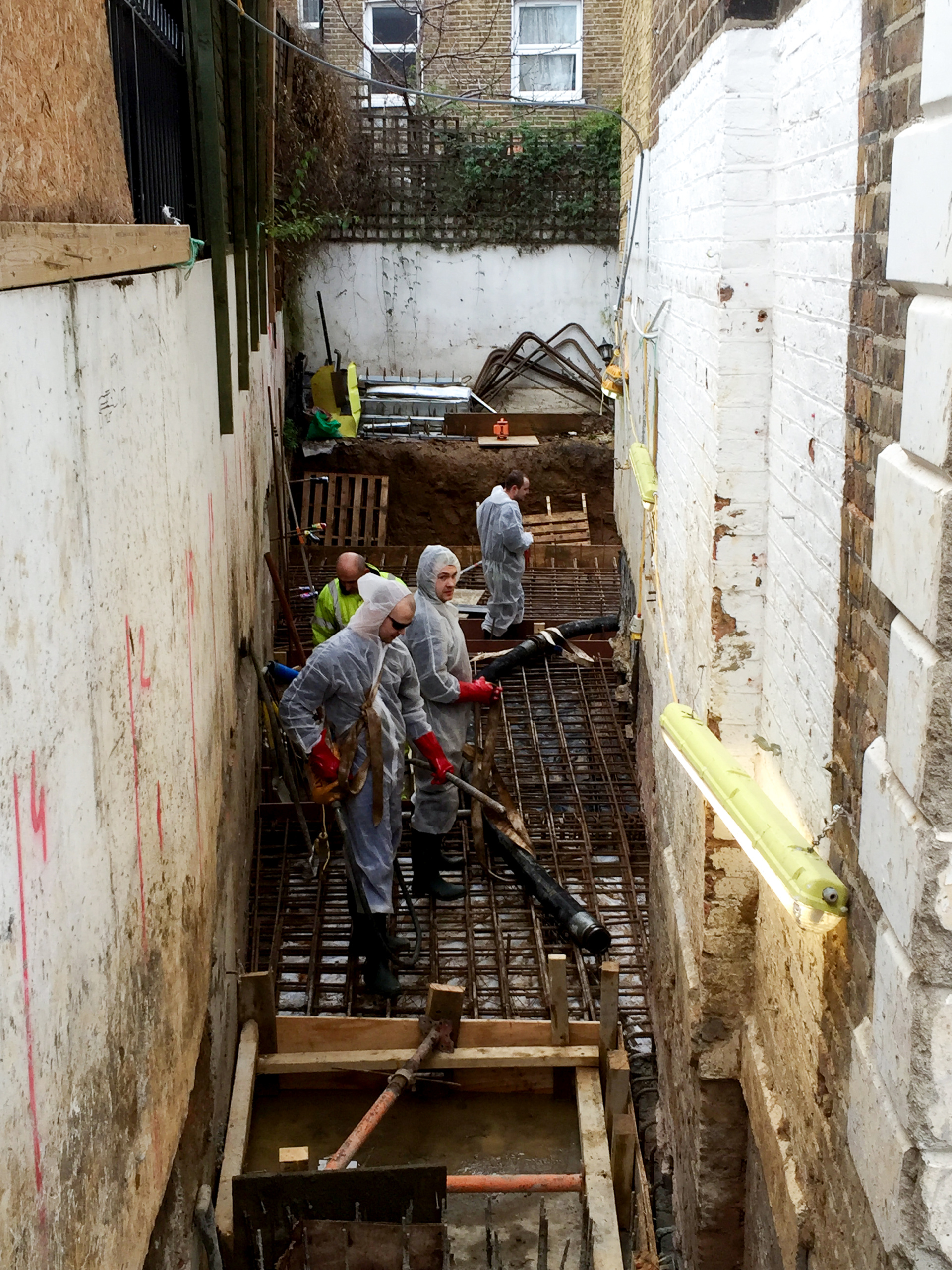
In scenarios where chemical injection is unsuitable—such as in basement conversions or properties with high salt contamination—we utilize cavity drain membrane systems. In this context, how does damp proofing work changes strategy: rather than blocking water, we manage it. We allow water to penetrate the structure but trap it behind a studded membrane, directing it to a sump and pump system. This is often the only viable solution for subterranean structures in the dense clay soil found across much of London.
Addressing Industry Skepticism: Does Damp Proofing Work?
There is a significant amount of misinformation circulating regarding remedial treatments, often perpetuated by poor diagnostic practices. Clients frequently ask: does damp proofing work, or is it a superfluous expense?
The answer requires nuance. Does damp proofing work? Yes, provided the diagnosis is accurate and the installation follows British Standard BS 6576. The technology is sound. Chemical DPCs and membrane systems are proven solutions. However, the industry is plagued by misdiagnosis. If a property is suffering from condensation due to lifestyle factors—drying clothes on radiators in unventilated rooms—installing a chemical DPC will achieve nothing.
However, for genuine rising damp—where groundwater contains hygroscopic salts (nitrates and chlorides)—does damp proofing work? It is the only effective way to stop the migration of these salts into your internal plaster. Without it, the wall will remain permanently damp as the salts absorb moisture from the air.
Longevity and ROI: How Long Does Damp Proofing Last?
When investing in structural repairs, durability is a key metric. How long does damp proofing last is a valid concern for freeholders and leaseholders alike.
Modern remedial DPCs are exceptionally durable. Most reputable contractors provide guarantees ranging from 20 to 30 years. However, the chemical barrier itself, once cured within the masonry, is stable. Therefore, how long does damp proofing last is often a question of the building’s lifespan rather than the product’s degradation.
It is important to note that longevity can be compromised by external alterations. If a driveway is paved over, raising the ground level above the injected DPC, the system is bridged, and moisture will bypass the barrier. This is a common issue we see in renovated properties across the capital. Provided the DPC is not bridged and the external pointing is maintained, how long does damp proofing last should not be a worry for the current generation of ownership.
Conclusion
Ultimately, what is damp proofing? It is a fundamental safeguard for your property. Whether you are managing a portfolio of rentals or protecting your family home, ensuring your walls are dry is essential for heat retention and structural health. Do not rely on generic advice; consult a qualified surveyor who understands the specific geology and architectural quirks of our local area.